I've started a new course at university called Audio-Visual Space, and the first project we have to accomplish involves creating what's known as a soundwalk. This soundwalk is a rather unique concept to me. I've always considered myself to be a very sense-driven person. I love experiencing the sounds, textures, sights and odours that the city has to offer. Wellington is quite a good city for this as it has a variety of all of these things. I enjoy sensing the city in this way.
The soundwalk is meant to be an experiential journey through a space or series of spaces, with a large emphasis on the sound of the spaces. The victim is instructed to pay close attention to the sounds in the spaces, or the lack thereof. The spaces vary from indoors to outdoors, from populated to barren, and the user is encouraged to explore and isolate the various layers of sound with their mind.
SOUNDWALK from Andrés salas on Vimeo.
Andrés Salas has a very interesting, informative video on the subject, part of which we watched in class. I really enjoyed the use of video in combination with strange and ambient sounds to drive his point. Super cool! We have to design our own soundwalk for this first project, which should be quite interesting to do and experiment with.

Friday, March 7, 2014

Thursday, March 6, 2014
INDN 311: First Impressions
INDN 311 is the God paper for the first trimester of third year. We're allowed free roam, and encouraged to design and make something that will get our work on several prestigious design blogs. Essentially, it's a class where we get to focus on and make one cool project and get famous. That's the plan at least. On the other hand, the prospect of focussing one whole trimester into a single project is also equally scary. It's scary the concept of our entire course riding on that one project.
The brief for the project basically entails that the project should be something electronic that incorporates 3D printing into it. It's such a broad scope that I'm afraid I'll get lost in it. But, I think that as long as I stay focussed and play to my strengths, I should be okay. I need to however also make sure that I don't do a project that's too safe. I need to get into the habit of thinking outside the box a little bit more. I don't do that enough.


The brief for the project basically entails that the project should be something electronic that incorporates 3D printing into it. It's such a broad scope that I'm afraid I'll get lost in it. But, I think that as long as I stay focussed and play to my strengths, I should be okay. I need to however also make sure that I don't do a project that's too safe. I need to get into the habit of thinking outside the box a little bit more. I don't do that enough.

This design is incredible cool and utilises already rather well understood technology, which I really love. The notion of bringing the outside world into a space that might not get to experience the outside world much is an awesome concept. Iskandar states that bringing some elements in from outside in the form of light, sound and motion decrease stress levels and make a person feel more at ease with their work.

This project is another very clever one. By manipulating where the phone sits on the speaker system, the user controls whether the phone plays, stops or switches to the radio. It's an incredibly funky, minimal design that I really love. The thought of bringing the physical into something that nowadays has become so digital is a really nice touch that Victor made.

These puppies are awesome. Apparently they don't work so well for lower bass notes, but for higher-range sounds, they work a charm. According to MocoLoco, their is an option to join a subscription to a live stream of ambient noise from speakers posted up in the mountains of Takayama and Morotsuka in Japan. So if you wanted to, you could bring the sounds of birds and wildlife into your home. I like these a lot, especially how it's not immediately clear what they are, as well as for bringing the outside into somewhere that isn't outside.

The good night lamp is another really awesome use of internet connectivity. The concept is that when the big house is turned on or off, the matching small lamp anywhere else in the world (provided it is linked to the internet) mimics it. I really enjoyed seeing the ideas that the creators had for it's use, and it's a really clever way of communicating with people anywhere non-verbally.
This course is going to definitely be very challenging, but I think also has the potential to be the most rewarding!
INDN 341: Strange Materials...
Our first class for Digital Fabrication started off very interestingly. We were given a piece of PVC, which is Polyvinyl Alcohol (Not to be confused with Polyvinyl Acetate, which is the wood glue) and told to go do some experiments with it. 10 experiments, to be exact. The material has some very interesting properties. We were given a third of a little cup shape to play with.
By far the most interesting feature of the material is that it dissolves in water, allowing a vast majority of functions with said feature. This property in something solid seems very strange to me, but it's obviously not unique. According to the way PVA is structured, the polymer connections start breaking down when they get into contact with water, and this breaking of the bonds is accelerated by heat.
I've done some experiments with the material, and to be honest, I haven't really had a chance to play with anything like this before. I've tried a whole variety of experiments on it, with interesting results.
Experiment 1: Water

 The first experiment I did focussed on one of the most defining features of the material, namely it's property to dissolve in water. I cut a small piece of the material, and then left it in a small glass of water. I stirred it a couple of times, and after a time, came back it, to find that it had completely dissolved into the water. Pretty cool.
Experiment 2: Stretching

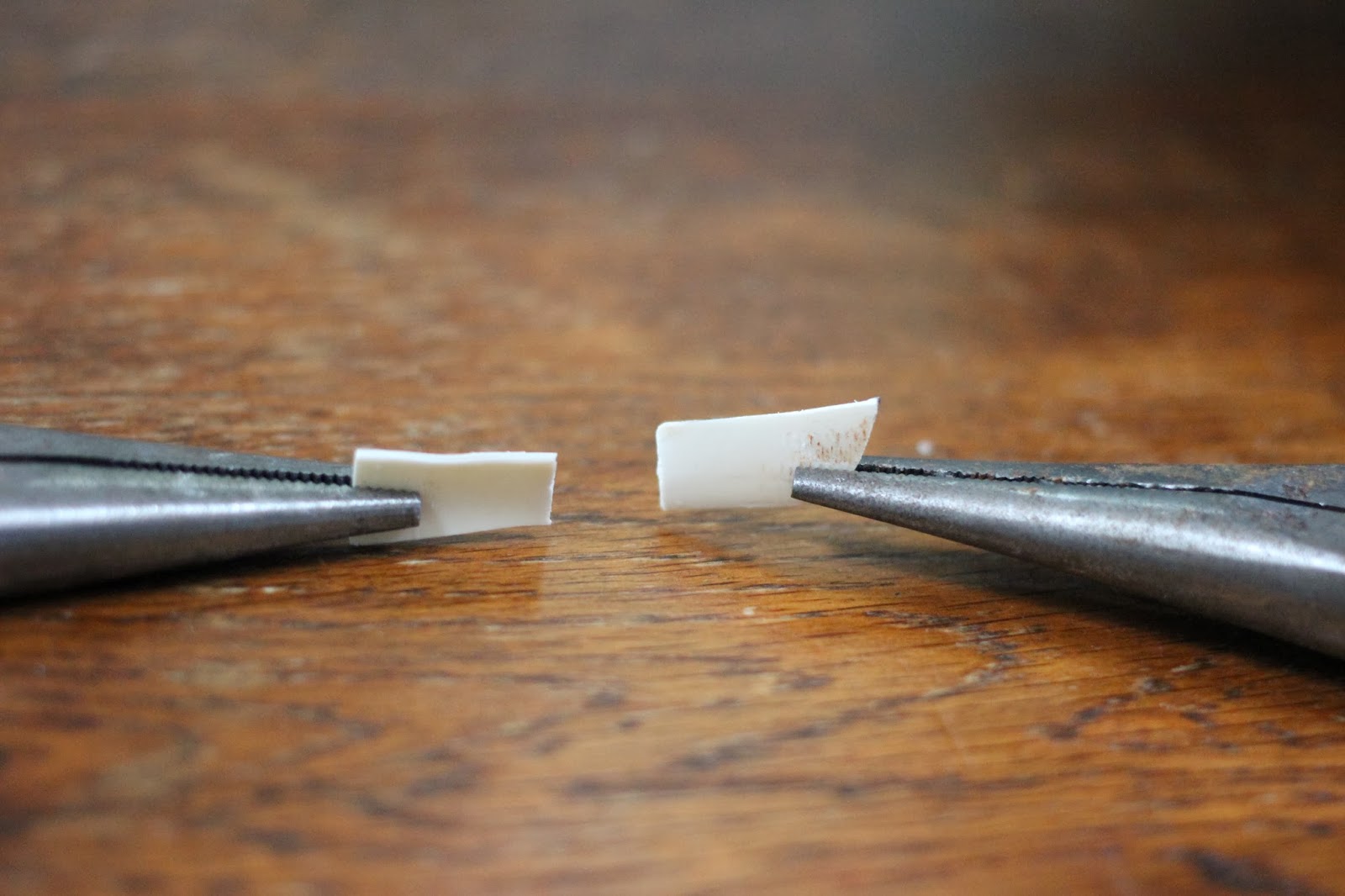 Stretching a small piece of the PVA resulted in a rather expected result. It stretched and then ultimately tore, but in a slightly different way to a normal plastic. The tear reminded me more of thick card, minus the fibrous elements.
Experiment 3: 40% Alcohol - 60% Water

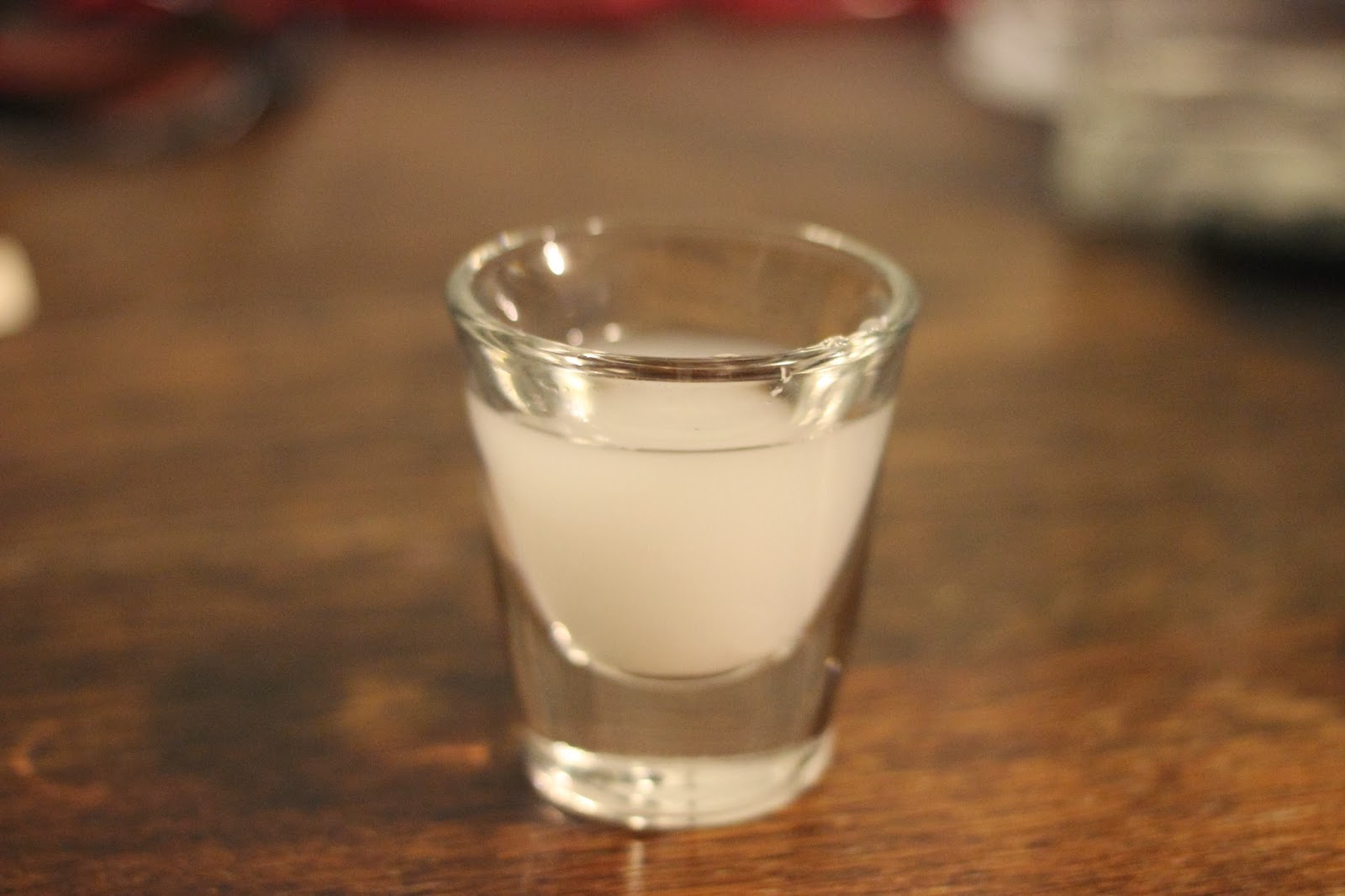
 This was one of the most interesting experiments, as it really changed the structure of the material without significantly changing the state. I don't fully understand the chemical process that takes place, however that fact that the vodka is mostly water would affect it in a similar way, however perhaps the presence of the alcohol inhibits the way it dissolves. The PVA swelled up and became extremely rubbery and soft to the touch. It's possible that the alcohol was partially absorbed by the PVA to have this effect.
Experiment 4: Burning

 This experiment also proved to be an interesting one, as the PVA actually burns like paper, as opposed to melting like plastic. It had a tendency to char, as well as proving to be an odd combination between paper and plastic in terms of the reactions it generates.
Experiment 5: Twisting

 Twisting the PVA resulted in a rather expected and similar result to stretching. It was marginally more resistant to the twisting than the stretching, but ultimately it too tore. The material is actually fairly soft and doesn't have much resistance to physical disfigurement at all.
Experiment 6: Bleach

 The bleach reacted relatively minimally with the PVA, merely softening it and dissolving it a bit. I must admit I was a little bit disappointed, as I expected the bleach to do something. It did make the PVA swell up a bit, much like the alcohol, however, rather than the alcohol, which kept the PVA's shape for the most part, the bleach turned it into more of a gelatinous pile. Very disgusting. Plus, it stunk of chlorine.
Experiment 7: Freezing

 Freezing the PVA resulted in something very interesting. The PVA mostly dissolved in water, as expected, however, once frozen and then smashing the ice cubes, it proved to have slightly changed the structure of the ice. The ice was much cloudier (due to the presence of the dissolved PVA) and the crystalline structure also looked significantly different to the original ice structure. Not sure how different exactly without a microscope.
Experiment 8: Dissolving & Evaporation

 This experiment was the most interesting by far. Evaporating the water off the dissolved PVA meant that the PVA re-bonded and formed a very fine, very pliable, not very strong film. This film peeled off the baking paper with much difficulty and expletives, but the result was quite interesting nonetheless. Apparently, when doped with iodine, PVA can be used to polarize light, which could give it a use for things like sunglasses or protective containers.
Sadly I didn't quite get to 10 experiments, but now I have enough to work with hopefully.
By far the most interesting feature of the material is that it dissolves in water, allowing a vast majority of functions with said feature. This property in something solid seems very strange to me, but it's obviously not unique. According to the way PVA is structured, the polymer connections start breaking down when they get into contact with water, and this breaking of the bonds is accelerated by heat.
I've done some experiments with the material, and to be honest, I haven't really had a chance to play with anything like this before. I've tried a whole variety of experiments on it, with interesting results.
Experiment 1: Water
Experiment 2: Stretching
Experiment 3: 40% Alcohol - 60% Water
Experiment 4: Burning
Experiment 5: Twisting
Experiment 6: Bleach
Experiment 7: Freezing
Experiment 8: Dissolving & Evaporation
Sadly I didn't quite get to 10 experiments, but now I have enough to work with hopefully.
Wednesday, February 19, 2014
The Trifecta!
So, it's the start of a new year (3rd Year!!!), and in standard fashion, I got bored of the old design of my blog. Every time I refine it, I think I've found the style that will stay for ever. Naturally, I think I've found it again. This time around I took the time to delve into the HTML and CSS and create something really cool. It wasn't particularly complicated meddling, but playing around with the way that pictures display, as well as how the page loads. I also experimented with simple text alteration sections, as well as the pre-built segments that blogger provides.
Another thing I've done is start up a secondary blog with my girlfriend. This blog is titled "Two Foxes With Cameras", and you guys can find the link to it in the new and improved sidebar just over on the right of the webpage. We've just started the blog, so there isn't a lot of matter, but that's okay, as we're going to be adding a lot more as time goes on. It's going to revolve around a shared love for photography, and how we can connect with regular "themes" on photos we take. Hopefully you'll see lots of content there soon.
Another thing I'm going to do in the next few weeks is try and start up two shops in Etsy, one devoted to the photography that I do, and another devoted to some design ideas that I decide to sell. We'll see where those take me, and hopefully they will take me somewhere!
This is the final year of my degree, so it's key that in this year I try and really get my name out there in terms of design blogs and fame. I've discovered it's more important than I initially supposed, and getting your name out there is really important for the job market later on. That's a bit scary, as I've only gotten a little bit of online traction. Something that I'm going to try and do a little bit better is build up a cleaner, more minimal portfolio site on cargocollective.com and then work on getting my work more visible.
Stay tuned for more!
Another thing I've done is start up a secondary blog with my girlfriend. This blog is titled "Two Foxes With Cameras", and you guys can find the link to it in the new and improved sidebar just over on the right of the webpage. We've just started the blog, so there isn't a lot of matter, but that's okay, as we're going to be adding a lot more as time goes on. It's going to revolve around a shared love for photography, and how we can connect with regular "themes" on photos we take. Hopefully you'll see lots of content there soon.
Another thing I'm going to do in the next few weeks is try and start up two shops in Etsy, one devoted to the photography that I do, and another devoted to some design ideas that I decide to sell. We'll see where those take me, and hopefully they will take me somewhere!
This is the final year of my degree, so it's key that in this year I try and really get my name out there in terms of design blogs and fame. I've discovered it's more important than I initially supposed, and getting your name out there is really important for the job market later on. That's a bit scary, as I've only gotten a little bit of online traction. Something that I'm going to try and do a little bit better is build up a cleaner, more minimal portfolio site on cargocollective.com and then work on getting my work more visible.
Stay tuned for more!
Subscribe to:
Posts (Atom)