Monday, March 10, 2014

MDDN 314: First Soundwalk Attempt

So, to get a feel for doing a soundwalk, I tried to plot out one today along one of my favourite walking routes. This was just to get into the mindset of really listening to the environment. This proved to be a little more challenging that I initially supposed. It's not the easiest thing disregarding your other senses...well, disregarding them is probably a bit of an overstatement, but you get my point.

The route I traversed today with starting points for the audio logs.

Point #1: St Peters Cathedral
Starting off in a very interesting space aurally was a bit of a boon, as it provided a good dynamic for then stepping outside. One of the most interesting things about stepping into the church is the floor. The floor has obviously got some solid wooden boards in it, but gives way to vacant space below as there is a very satisfying *clomp clomp* noise when you walk. The other obvious thing is that churches and cathedrals have amazing acoustics, and with it being in the middle of a Sunday service, there was amazing choral music coming from within.

 
After the church, I left and turned right down Willis St, paying close attention to the sounds of the street as well as the sounds coming from the two other churches on the route.


Point #2: The Hangar
Coming around the corner onto Dixon St, there's a coffee place a little bit down the street. One of the best parts of this particular section was the way the sound from the cafe got louder as you got closer.

The sounds of the cafe almost take over your ears as if you were stepping into a bubble. It's actually quite surreal and sounds really cool on the recording. That was the aspect of that section of the soundwalk that I enjoyed a lot. Being able to pick out little sections in the sound "waves" of the cafe was a really big part of this soundwalk section.


The way the different sections of sound change in volume and alter in dominance is quite amazing. I love the way the mind chooses what is relevant as well as the actual physical sounds playing off against each other.


Point #3: Dixon St Crossing
This section I chose because the sound of the rustling leaves in the wind is quite a nice feature, since it really highlights the fact that there are always little green spaces in the middle of the Wellington CBD, even if it's still a city.


The way the sounds of the traffic come in waves as it passes by provides a dynamic backdrop to the soundscape.

Point #4: Alleyway Behind The Met Shop
This is another favourite little nook of mine. Situated behind the Met Shop and a Korean restaurant, it provides another little bubble from the city noise. The effect the semi-enclosed space has on the sound quality is really cool. It's surprisingly quiet as well as distorted.

One of the features of the space is the sound of one of the kind of broken vent fans. It sounds clunky and in need of a good oil or replacement. Occasionally you can hear the sound of a siren really well in the space, and sometimes if you're very lucky, you can hear some seagulls, serving as a gentle reminder of how close you are to the sea.


The space itself will however always provide an industrial feel to it, with the way the sounds echo reminiscent of a concrete jungle.


Point #5: Cuba St
Cuba St is where the life of the city is. People talking, children screaming, many many feet and a busking musician. The life of the city can be felt here. The sounds of the cars are but a distant hum as the voices of many fill the space around you.

The way the sound echoes gives you a sense of how well used and populated the space is. At night, the story changes completely, as the gentle hubbub of the city gives way to more individual, pin-pointable noises and voices.


Passing by the different shops provides a constantly changing stream of sounds. Whispers of different songs and the sounds of cash registers and clothes rails fill the motive space.


Point #6: Towards Michael Fowler
The older, more historical buildings here change the way the sound works, and the distinctly smaller number of people fills the sound space in a smaller way. The loss of control of the space to auto mobiles allows them to take over the sound scape with occasional singular waves of grey noise.


Passing by more coffee stores, the sounds of the coffee grinders running and the used coffee being knocked out provides a respite from the softer sound of the quiet ends of Cuba St.


Point #7: Route Into Civic Square
One of Civic Square's entrances is a small gap between the glass walls of the Michael Fowler Centre and the Town Hall's concrete shell. This space opens up quickly, but at the smallest point it is quite narrow. This divides the two sound worlds rather beautifully.

On the one side, you have the sound of the vehicles quite prominently, and then when you step through, they are overtaken by the distant roar of the six-lane Jervois Quay filtering over the walls of the square. The space feels huge, and the sound emulates this. Voices can be heard all around as people flow to and from the wharf and the city.


However, the space still feels quiet. It's a place of solace in the realm of the concrete jungle. The wind still whistles through occasionally, but that is but a small worry.


Point #8: Under The Wooden Bridge
Travelling down the stairs alongside the overpass/bridge, one feels this is the road less travelled by pedestrians. The wind picks up, and the lack of crossings make traversing the road troublesome.

That said, the sound of the cars is amplified and distorted by the concrete ceiling the bridge provides. The reverberation of the sounds could almost be mistaken for the ocean at times.


A lack of human noise makes the space feel a little barren, yet safe at the same time.


Point #9: The Wharf
Once again, the people hum takes over again. Coming out under the bridge and jumping onto the wooden wharf structure, the whole audio scene opens up. The sound of the people is directed towards you by the huge curvature of the space.

On this particular day, there was a competition on, and everyone was cheering. The sound of the microphones begins to pervade the air. Are we at the racetrack? It feels like that could be the case. The white noise of the water fountains flows and ebbs as you walk past it.


The sound of many footfalls on the wooden bridge slats as you cross it provides a steady, irregular rhythm, and allows the sound of voices to dull a bit.


Point #10: Te Papa Museum
Moving along the wharf towards the museum, the amount of people decreases. They are all watching the competition. Excited children yell about the pretty things in the container pop-up shops.

Passing the Te Papa logo, I tap on the different parts of it, and the result is very oddly musical. The metal, musical sound feels out of place among the ambient, white noise.


As you enter the museum, the sliding doors squeak as they open. People's feet shuffle as they move across the textured carpet entrance. The audio space closes up, and it's again obvious you've entered an indoor space, yet one that feels impossibly large.


Point #11: Wharf Farmer's Market
The rustle of the plastic bags as you enter the market is a big feature. People stuffing the bags and their baskets with all manner of food and other things changes the backdrop again. Music is everywhere. Buskers are left and right, and the loudest music gets your attention.
A big band with a dancing rhythm catches your ear. The trumpets call out over the noise of the crowds. The sizzles of many cooking stoves give the sounds more depth. Leaving the edge of the market, the individual conversations of the masses that move with you become more apparent.


You wonder what they are talking about, and why their bags are rustling still. Did they not find all they needed to in the market?

Friday, March 7, 2014

MDDN 314: What Is A Soundwalk?

I've started a new course at university called Audio-Visual Space, and the first project we have to accomplish involves creating what's known as a soundwalk. This soundwalk is a rather unique concept to me. I've always considered myself to be a very sense-driven person. I love experiencing the sounds, textures, sights and odours that the city has to offer. Wellington is quite a good city for this as it has a variety of all of these things. I enjoy sensing the city in this way.

The soundwalk is meant to be an experiential journey through a space or series of spaces, with a large emphasis on the sound of the spaces. The victim is instructed to pay close attention to the sounds in the spaces, or the lack thereof. The spaces vary from indoors to outdoors, from populated to barren, and the user is encouraged to explore and isolate the various layers of sound with their mind.


SOUNDWALK from Andrés salas on Vimeo.

Andrés Salas has a very interesting, informative video on the subject, part of which we watched in class. I really enjoyed the use of video in combination with strange and ambient sounds to drive his point. Super cool! We have to design our own soundwalk for this first project, which should be quite interesting to do and experiment with.

Thursday, March 6, 2014

INDN 311: First Impressions

INDN 311 is the God paper for the first trimester of third year. We're allowed free roam, and encouraged to design and make something that will get our work on several prestigious design blogs. Essentially, it's a class where we get to focus on and make one cool project and get famous. That's the plan at least. On the other hand, the prospect of focussing one whole trimester into a single project is also equally scary. It's scary the concept of our entire course riding on that one project.

The brief for the project basically entails that the project should be something electronic that incorporates 3D printing into it. It's such a broad scope that I'm afraid I'll get lost in it. But, I think that as long as I stay focussed and play to my strengths, I should be okay. I need to however also make sure that I don't do a project that's too safe. I need to get into the habit of thinking outside the box a little bit more. I don't do that enough.


This design is incredible cool and utilises already rather well understood technology, which I really love. The notion of bringing the outside world into a space that might not get to experience the outside world much is an awesome concept. Iskandar states that bringing some elements in from outside in the form of light, sound and motion decrease stress levels and make a person feel more at ease with their work.


This project is another very clever one. By manipulating where the phone sits on the speaker system, the user controls whether the phone plays, stops or switches to the radio. It's an incredibly funky, minimal design that I really love. The thought of bringing the physical into something that nowadays has become so digital is a really nice touch that Victor made.


These puppies are awesome. Apparently they don't work so well for lower bass notes, but for higher-range sounds, they work a charm. According to MocoLoco, their is an option to join a subscription to a live stream of ambient noise from speakers posted up in the mountains of Takayama and Morotsuka in Japan. So if you wanted to, you could bring the sounds of birds and wildlife into your home. I like these a lot, especially how it's not immediately clear what they are, as well as for bringing the outside into somewhere that isn't outside.


The good night lamp is another really awesome use of internet connectivity. The concept is that when the big house is turned on or off, the matching small lamp anywhere else in the world (provided it is linked to the internet) mimics it. I really enjoyed seeing the ideas that the creators had for it's use, and it's a really clever way of communicating with people anywhere non-verbally.

This course is going to definitely be very challenging, but I think also has the potential to be the most rewarding!

INDN 341: Strange Materials...

Our first class for Digital Fabrication started off very interestingly. We were given a piece of PVC, which is Polyvinyl Alcohol (Not to be confused with Polyvinyl Acetate, which is the wood glue) and told to go do some experiments with it. 10 experiments, to be exact. The material has some very interesting properties. We were given a third of a little cup shape to play with.

By far the most interesting feature of the material is that it dissolves in water, allowing a vast majority of functions with said feature. This property in something solid seems very strange to me, but it's obviously not unique. According to the way PVA is structured, the polymer connections start breaking down when they get into contact with water, and this breaking of the bonds is accelerated by heat.

I've done some experiments with the material, and to be honest, I haven't really had a chance to play with anything like this before. I've tried a whole variety of experiments on it, with interesting results.

Experiment 1: Water

The first experiment I did focussed on one of the most defining features of the material, namely it's property to dissolve in water. I cut a small piece of the material, and then left it in a small glass of water. I stirred it a couple of times, and after a time, came back it, to find that it had completely dissolved into the water. Pretty cool.

Experiment 2: Stretching

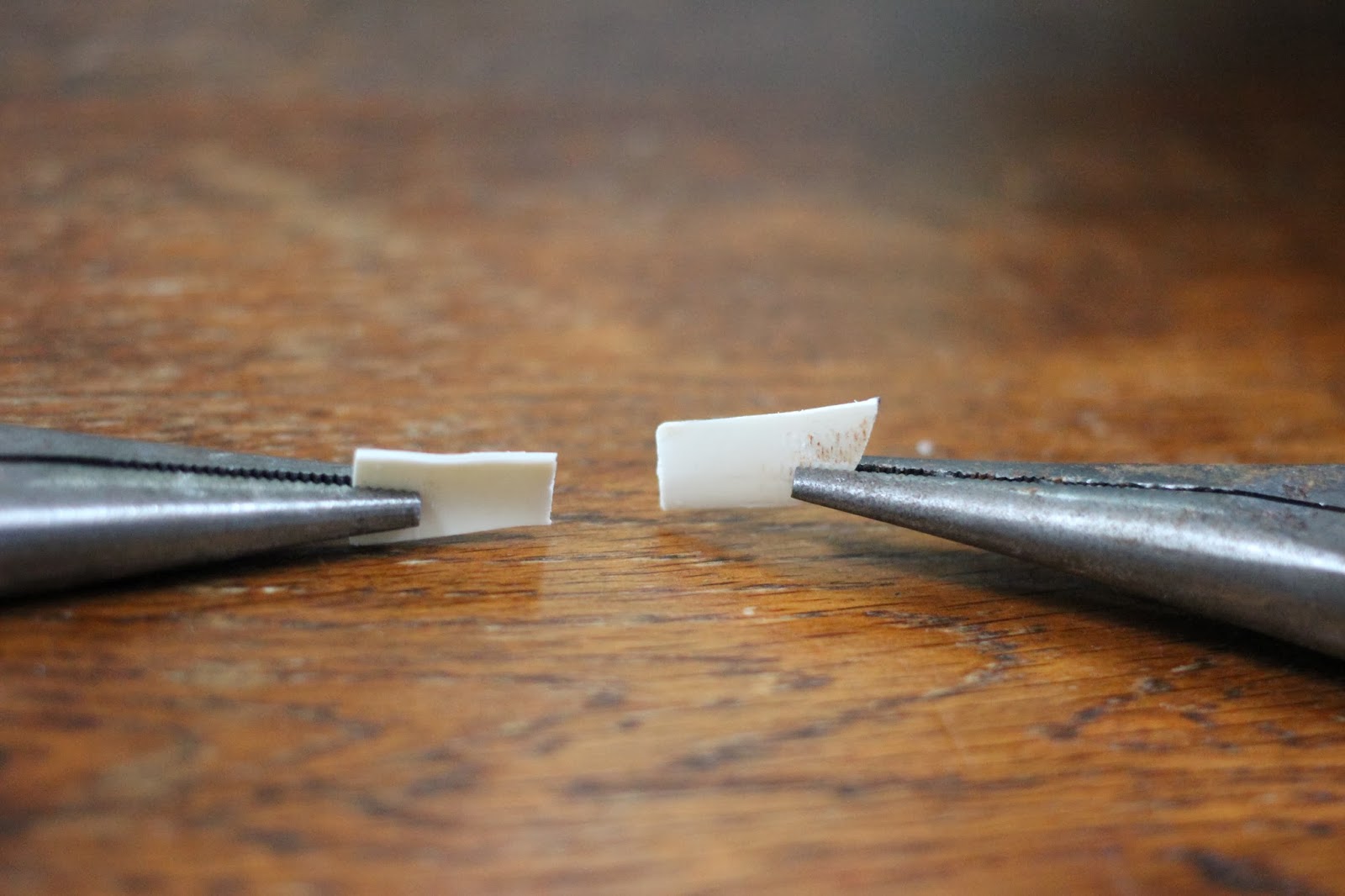
Stretching a small piece of the PVA resulted in a rather expected result. It stretched and then ultimately tore, but in a slightly different way to a normal plastic. The tear reminded me more of thick card, minus the fibrous elements.

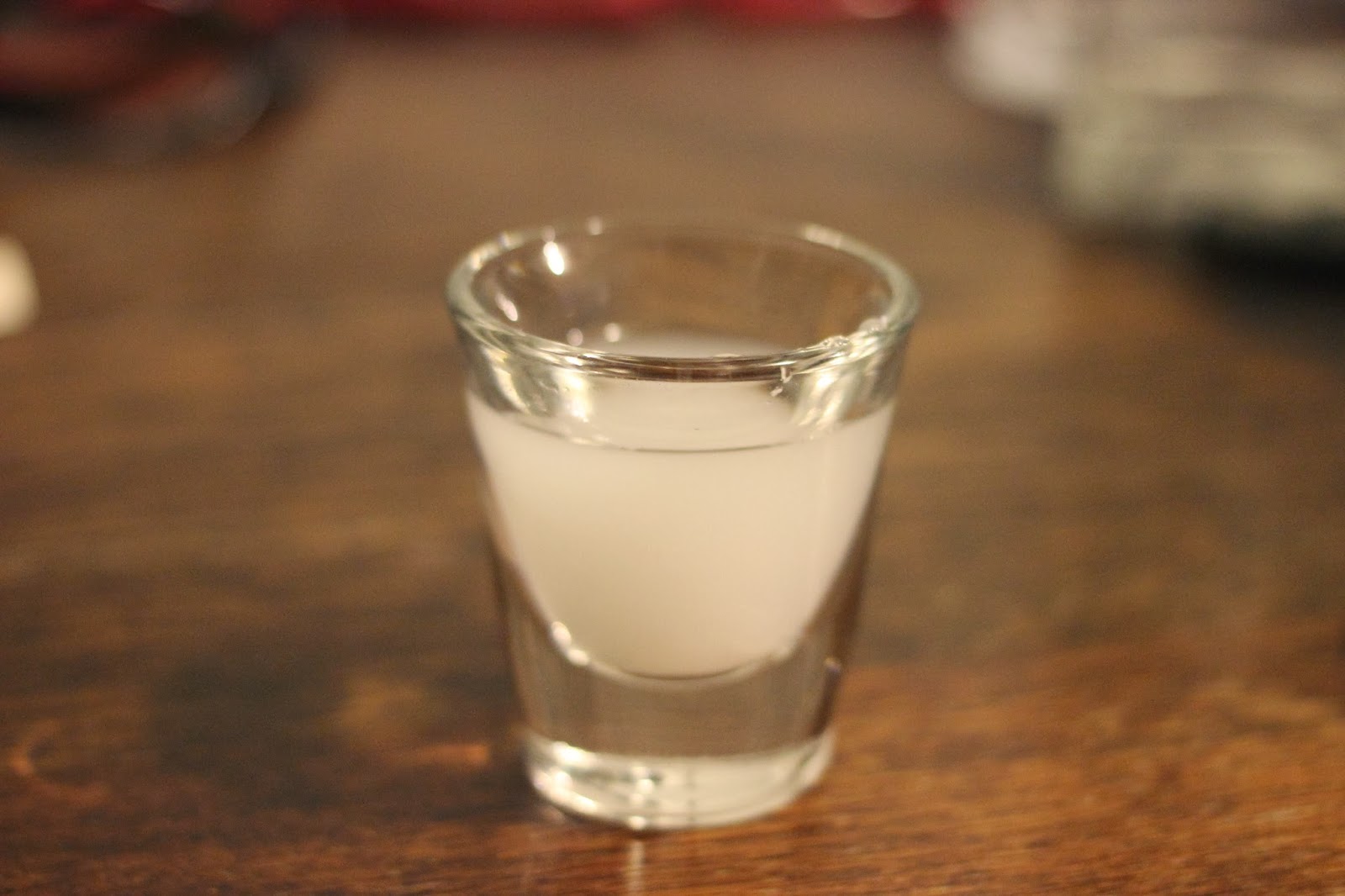
Experiment 3: 40% Alcohol - 60% Water

This was one of the most interesting experiments, as it really changed the structure of the material without significantly changing the state. I don't fully understand the chemical process that takes place, however that fact that the vodka is mostly water would affect it in a similar way, however perhaps the presence of the alcohol inhibits the way it dissolves. The PVA swelled up and became extremely rubbery and soft to the touch. It's possible that the alcohol was partially absorbed by the PVA to have this effect.

Experiment 4: Burning

This experiment also proved to be an interesting one, as the PVA actually burns like paper, as opposed to melting like plastic. It had a tendency to char, as well as proving to be an odd combination between paper and plastic in terms of the reactions it generates.

Experiment 5: Twisting

Twisting the PVA resulted in a rather expected and similar result to stretching. It was marginally more resistant to the twisting than the stretching, but ultimately it too tore. The material is actually fairly soft and doesn't have much resistance to physical disfigurement at all.

Experiment 6: Bleach

 The bleach reacted relatively minimally with the PVA, merely softening it and dissolving it a bit. I must admit I was a little bit disappointed, as I expected the bleach to do something. It did make the PVA swell up a bit, much like the alcohol, however, rather than the alcohol, which kept the PVA's shape for the most part, the bleach turned it into more of a gelatinous pile. Very disgusting. Plus, it stunk of chlorine.

Experiment 7: Freezing

Freezing the PVA resulted in something very interesting. The PVA mostly dissolved in water, as expected, however, once frozen and then smashing the ice cubes, it proved to have slightly changed the structure of the ice. The ice was much cloudier (due to the presence of the dissolved PVA) and the crystalline structure also looked significantly different to the original ice structure. Not sure how different exactly without a microscope.

Experiment 8: Dissolving & Evaporation

This experiment was the most interesting by far. Evaporating the water off the dissolved PVA meant that the PVA re-bonded and formed a very fine, very pliable, not very strong film. This film peeled off the baking paper with much difficulty and expletives, but the result was quite interesting nonetheless. Apparently, when doped with iodine, PVA can be used to polarize light, which could give it a use for things like sunglasses or protective containers.

Sadly I didn't quite get to 10 experiments, but now I have enough to work with hopefully.